18th century satellites
by Kelly Presutti | 15 May 2010 | Museums
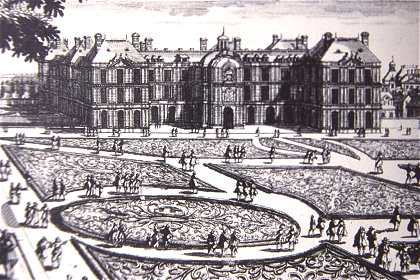
Palais du Luxembourg in the 17th century
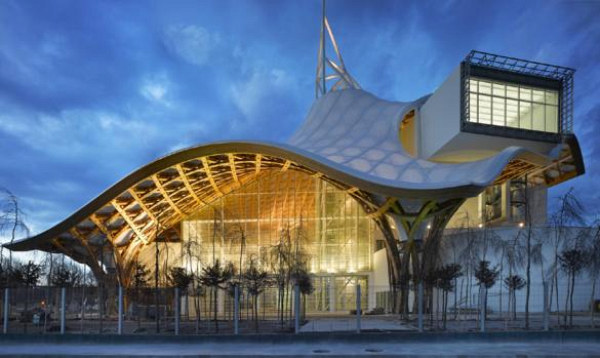
Centre Pompidou-Metz
The Centre Pompidou-Metz, which officially opened Wednesday, is one of a recent surge of “satellite museums” in what would seem to be a contemporary phenomenon.
Yet the desire to make use of collections otherwise confined to storage could arguably have emerged simultaneously with the idea of the modern French museum. In 1750, even before the Louvre was officially a museum, paintings from the royal collection “traveled” to the Luxembourg palace for public display, making “satellite museums” a historically grounded phenomenon with rather entangled political connotations. Andrew McClellan teases out the significance of the exhibition in the Luxembourg galleries in Inventing the Louvre. Put in place under Charles-Francois Lenormand de Tournehem, the director general of the Bâtiments du roi, McClellan writes:
Over and above the appeal of art as a vehicle of upward social mobility, Lenormand must have recognized in the Bâtiments post an opportunity to make his mark as a civil servant by effecting improvements in an area of government perceived as in need of reform.
Sarkozy, at the inauguration ceremony in Metz:
This museum, which is a strong cultural act, is at the same time an element of a strategic policy of economic development. … France believes in art and France believes that investing in a museum as extraordinary as this one is as important as investing in a university, in a laboratory, in nanotechnology.
Louis Petit de Bachaumont, who McClellan suggests likely proposed the idea for display in the Luxembourg galleries, was also one of the earliest proponents of art conservation; in the proposal submitted to King Louis XV it was noted:
And as they will be on display attention will be given to those in need of restoration. Appropriate restorations will be carried out under the supervision of the First Painter of the King.
The Pompidou similarly took the opportunity to restore works that would be on display in Metz, including Joan Miro’s Bleu triptych of 1961.
One distinction, of course, that has been repeatedly emphasized is that the Centre Pompidou Metz is not an outpost of the Centre Pompidou, but rather an independent entity, akin to a kunsthalle. The Louvre Lens, projected to open in 2012, will be used to showcase primarily Louvre works, albeit in radical curatorial configurations that will “abolish frontiers between techniques, schools or regions.”
