Digital Connoisseurship
by Jon Lackman | 24 September 2010 | Uncategorized
André Gunthert has called my attention to a fascinating new “reverse image search” tool called TinEye. Simply put, you give it an image and it finds similar ones. Gunthert found himself wondering where Le Nouvel Observateur had gotten the photo it used to create a recent cover. TinEye located it easily, despite the additional text that lay atop the photograph on the magazine’s cover. There must be tons of other uses for this. Trying to identify an unknown work of art? Got an image on your hard drive that you’ve forgotten the name of? Here’s an example: Do you know who painted this?:
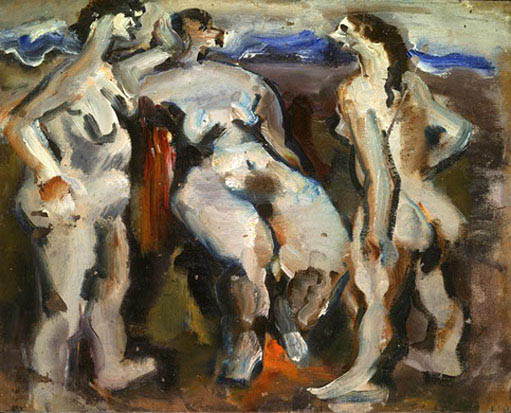
TinEye does.
The technology is not yet sophisticated enough to match part of one image to part of another, but I imagine that’s only a matter of time.

Wow, this is pretty fantastic. I wonder how this could affect the study of art history. Could there be less need for slide identification in the future, if technology can provide all of the answers? I would hope not (I already fear that technology has replaced my brain for far too many everyday things), but Tin Eye could prove me wrong.
Thanks, Jon, for such an interesting posting. One use: sites like JJJJound are popularizing the ‘inspiration board’ approach to blogging, which assembles images with no hint at their digital origins. Two or three searches with Tin Eye suggests that even with a cut-and-paste approach that disregards context, tracing the images back to their source(s) is reasonably easy to do. The web seems simultaneously to fragment and offer directions for reassembly.
I mean even if slide IDing is less of a practical skill now, it’s still a good way to start training one’s eye for art.
And Gazopa is also quite impressive
http://www.gazopa.com/